
'Hedda' Review: Nia DaCosta's Phenomenal Queer Reimagining of Ibsen's Play, Led by Tessa Thompson, Tops its Source Material
Nia DaCosta has been on my list of the most exciting filmmakers to watch since her 2018 Tribeca Film Festival debut feature, Little Woods, blew me away. Criterion, when?! Then she entered the indie-to-studio-sequel pipeline. A Tinseltown tale as old as time. Her efforts on Candyman and The Marvels, which I enjoyed, lacked the DaCosta decadence I missed.
The first of her fall-winter one-two punch (God bless) before 28 Years Later: The Bone Temple in January, Hedda puts DaCosta back in the solo writer saddle, reuniting with Little Woods lead Tessa Thompson. However, her take on Norwegian playwright Henrik Ibsen's beloved 1891 play isn't your grandmother's Hedda Gabler. This Hedda is here, queer, and serving some bratty chaos. With this astonishing reimagining, DaCosta and Thompson prove again to be a powerhouse duo, delivering career-best work in their respective fields.
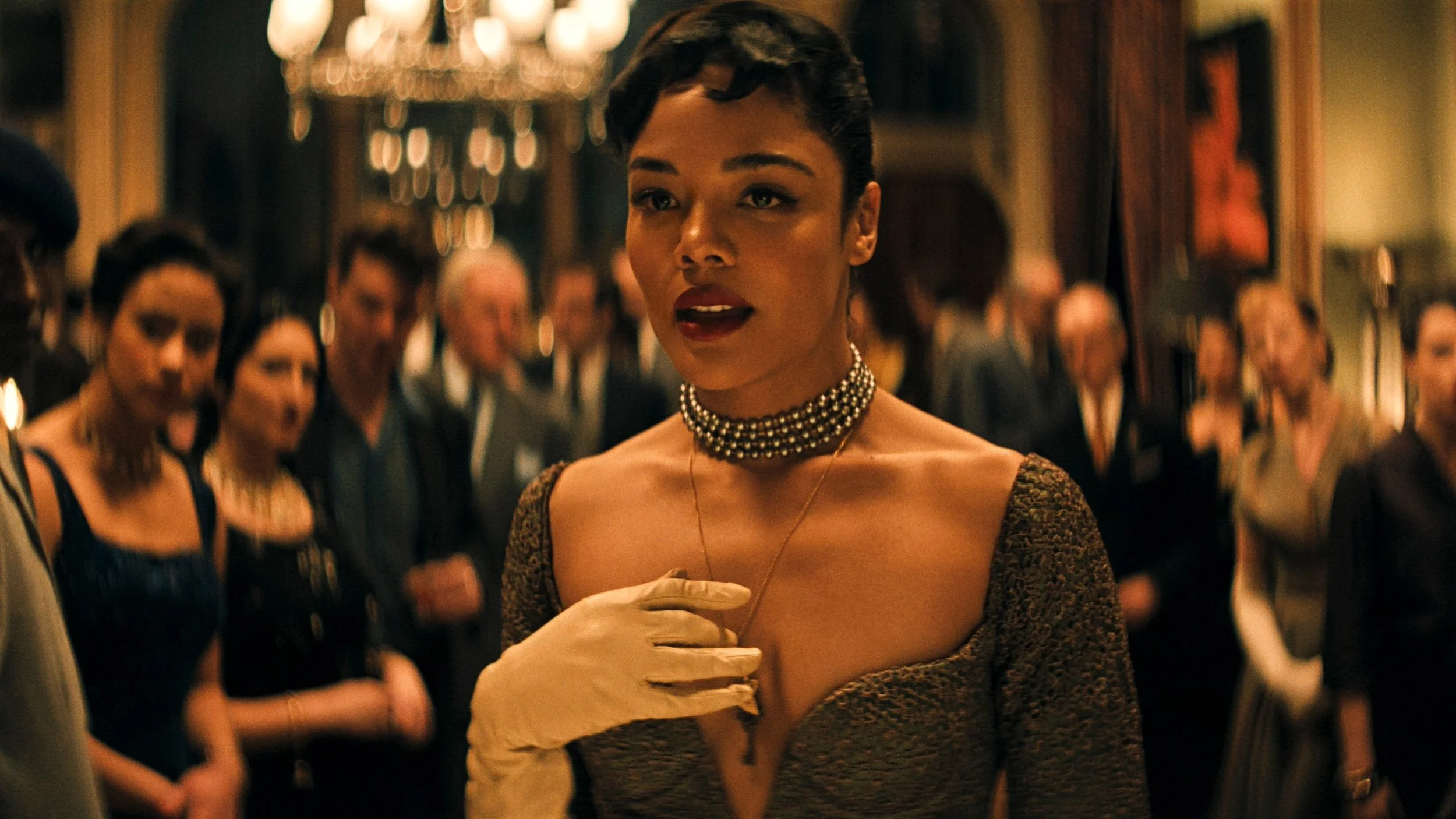
Image copyright (©) Courtesy of Amazon MGM Studios
MPA Rating: R ( For sexual content, language, drug use and brief nudity.)
Runtime: 1 Hour and 47 Minutes
Language: English
Production Companies: Orion Pictures, Plan B Entertainment, Once and Future Productions, Viva Maude
Distributor: Amazon MGM Studios
Director: Nia DaCosta
Writers: Nia DaCosta
Cast: Tessa Thompson, Nina Hoss, Imogen Poots, Tom Bateman, Nicholas Pinnock, Kathryn Hunter, Finbar Lynch
U.S Release Date: October 22, 2025 (Theatrical) |October 29, 2025
It’s the 1950s in England. Hedda Gabler (Tessa Thompson) and her scholar husband, George Tesman (Tom Bateman, great at playing a basic, subservient white man), have returned from their six-month honeymoon to their luxurious estate. She's about to host a lavish, Project X-style party – which they can’t afford – for all of their bureaucratic pals in academia, and hopes that Gabler's lover-on-the-down-low, Judge Roland Brack (a slimy and menacing Nicolas Pinnock), can help assist financially. This also includes Professor Greenwood (Finbar Lynch), whom he wants to appease for a teaching position at the nearby university. However, Hedda receives a call from her ex-lover, the author/professor Eileen Lovborg (powerhouse Nina Hoss), with whom she is still infatuated, informing her that she intends to attend the party. Before everyone else arrives, Hedda's former schoolmate, Thea Cliften (an ostensibly worry-ridden Imogen Poots), shows up and asks for Eileen. Hedda learns that Thea is Eileen's new girlfriend. Upon Eileen's arrival, Hedda quickly realizes that she’s in competition with George for the same teaching position. As the night wears on, Hedda grows power-hungry and uses her arsenal of manipulation to launch psychological warfare, deceit, and treachery on everyone in her vicinity, including her husband, Eileen, Thea, and Brack.
Hedda Gabler is here, queer, and raising some hell.
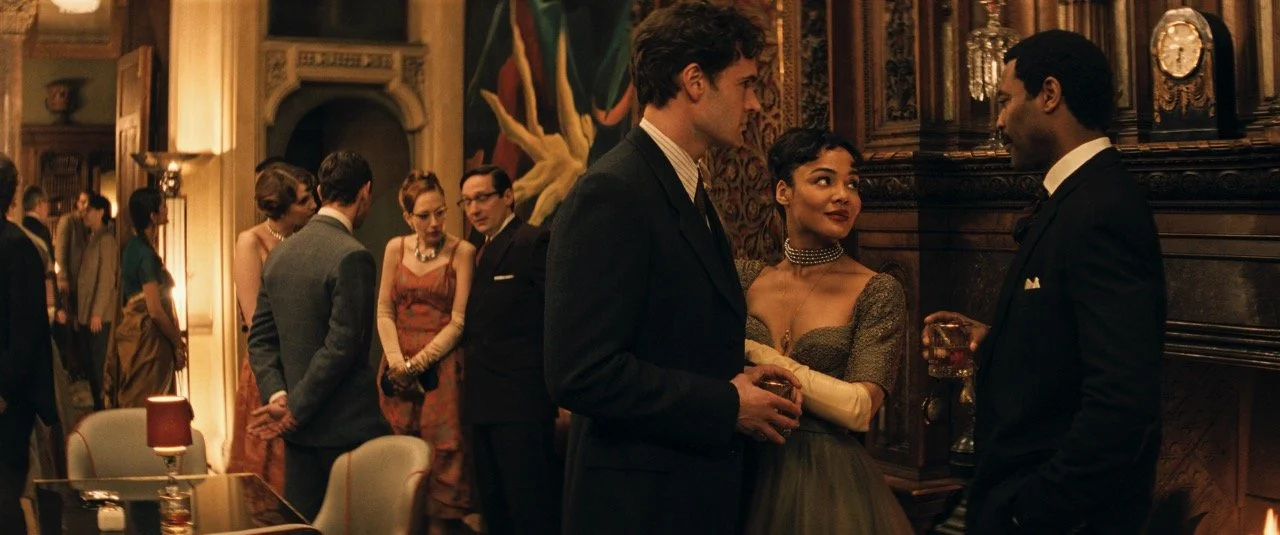
(L-R) George Tessman (Tom Bateman), Hedda Gabler (Tessa Thompson) and Judge Roland Brack (Nicholas Pinnock) in HEDDA. | Photo Credit: Courtesy of Prime
DaCosta's interpretation and Thompson's portrayal of Hedda Gabler are like Regina George if she embraced her queerness and became the most terrifying bisexual ever. She's a cunning, diabolical villain, a chaos agent, so confident that she's not even fazed when a chandelier above her nearly drops. As the daughter of a general, she embodies every characteristic of a nepo baby.
In a British, fanciful manner, Thompson mesmerizes by illustrating a bratty, rich behavior. She may be shorter than all of her costars, but Thompson towers over everyone with sheer bravado and delicious cunningness, delivering one of my favorite performances of the year, and from her entire filmography. Everyone acts in accordance with Hedda's commands, even if it results in the dismay or destruction of others. Thompson's facial expressions reminded me of Archie Madekwe from Saltbu—just kidding, Lurker, where she flashes small, fleeting grins watching her subordinates flounder while she puppeteers everyone in the room.
Gabler's destructive, unhinged actions cause this party to spiral into madness, and it's a thrill to watch it unravel. The most enticing aspect stems from how exquisitely DaCosta's script analyzes that, beneath the lavish party and faux power, her father's passing forced Hedda to make desperate choices to retain the security of wealth she can’t live without, creating her own binding chains in the process. An excellent Kathryn Hunter scene spewing exposition about the couple's financial status stands out the most.
DaCosta’s bold changes to Ibsen's text adds phenomenal layers to Gabler.

(L-R): Hedda Gabler (Tessa Thompson), Eileen Lovborg (Nina Hoss), Thea Clifton (Imogen Poots) in HEDDA. | Photo Credit: Parisa Taghizadeh
The house is its own character, acting as both a game board and a prison of Hedda's own design. Props to production designer Cara Brower, whose transformation of single-location estate Flintham Hall into a ‘50s backdrop lets Hedda orchestrate the party's mood, sometimes making it feel like an Agatha Christie murder mystery and other times like a party straight out of a Paolo Sorrentino movie. Sometimes both at the same time.
As the night progresses, you get a clear sense of why Hedda acts the way she does. She’s a woman who never heard “no” for an answer and would expunge one's soul from their mortal coil if they denied her what she wanted.
DaCosta's ambitious transformation of Lovborg into a lesbian and having also been romantically involved with Thea adds a sprawling, nuanced layer to Ibsen's text. Navigating with unabashed queer zest and exceptionally stylish cues, the relationship between Gabler and Eileen is a challenge of staying true to one's identity and desire. Powerhouse Nina Hoss dominates the screen and plays off the allure Thompson exudes. Hedda's influence causes Eileen to struggle to overcome her alcoholism and regain her composure. One of the most compelling instances is Nina Hoss' performance in a scene that positions her Lovborg for humiliation and failure. She confronts the situation with utmost professionalism and subverts the moment by establishing herself as the commander of attention.
It's a psychological war between two glass dolls coated in titanium being stripped apart. Whereas Hedda is on an onslaught to strip her former lover, to pierce that glass, she’s on a ticking time clock caused by her impulsiveness and wrongdoing rearing their head. Nevertheless, she quietly, relentlessly pursues Eileen throughout the night, as if she had intended to inflict the same fate upon herself. This underscores the infamous symbolism of Hedda and her guns.
A more profound sense of liberation is evoked by Hedda's Blackness.
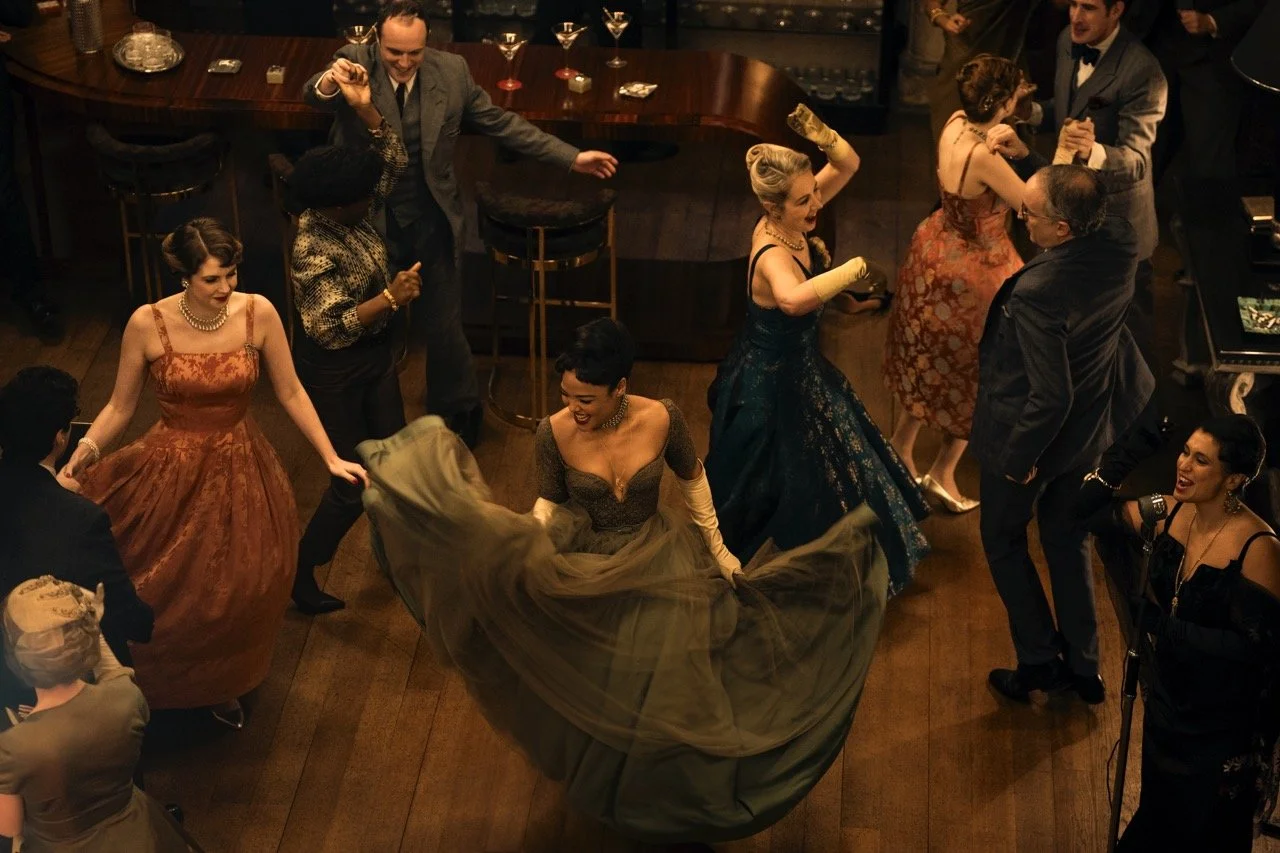
Tessa Thompson stars as "Hedda Gabler" in HEDDA. Photo Credit: Matt Towers
Race and gender are handled with great care in this iteration, as the diversity isn't just window dressing; it adds a coat of meaning to their identities and purpose. Because Hedda is a Black woman who prioritizes her own freedom over that of others, the film has a strong engine that makes this version stand out. It’s uncommon to see an evil Black bisexual woman in the spotlight in film, yet you empathise with her during her selfish pursuit of freedom and return to a fluidity of comfort, using her power as a cover for her actual discontent with life.
Final Statement
DaCosta's multilayered reinvention of Hedda is a razor-sharp cerebral character analysis powered by bisexual chaos and a monumental Tessa Thompson performance that I cannot envision in any (heter)other way.
Please consider supporting Rendy Reviews. We’re an independent run, Gen-Z and Black-owned entertainment outlet. You can donate to our Paypal or Venmo to help keep our site running. Or become a subscriber for access to 13-years worth of reviews, exclusive interviews, and more! A free way to support is a sign up for the Rendy Reviews’ newsletter and get weekly emails about latest on movie reviews, interviews with film artisans, features, and more.
